
The dining room fills up every Friday night. The food is exceptional, the service is warm, and guests leave happy. Then two weeks pass and those same guests can't quite remember the name of the place. That gap is a restaurant branding problem, not a food problem. A strong restaurant brand identity is the full system that connects what happens inside your four walls to how guests remember, find, and choose you again.
At Paige Madden Design, we work exclusively with hospitality concepts: restaurants, bars, hotels, and venues. The same pattern shows up constantly. Operators invest deeply in the dining experience and treat the brand identity as an afterthought. This article walks you through exactly how to fix that, starting with strategy and ending with a measurable framework to track whether it's working.
Define your brand strategy before opening any design software
Many restaurant owners skip this step entirely, and it's the reason so many logos feel disconnected from the actual concept. Your brand strategy is the foundation everything else is built on. Without it, visual decisions become guesswork and inconsistency becomes inevitable across every touchpoint you own. Operational pressures and tight pre-opening budgets make it easy to defer, but skipping strategy is exactly how restaurants end up with a beautiful logo that doesn't reflect what they actually serve or who they're serving it to.
Start with positioning. Identify what makes your restaurant genuinely different from the three other options within walking distance. This is your concept position: the specific combination of cuisine, atmosphere, price point, and guest promise that no nearby competitor can claim exactly. Write it in one clear sentence and post it somewhere you'll see it daily.
Next, define your target guest with specifics, not demographics. Move beyond "adults 25 to 45." Describe the guest's context. Are they celebrating a birthday, grabbing a weeknight dinner after work, or hosting a client lunch? Your visual identity and brand voice should speak directly to that moment, not to a broad audience segment that means nothing to a designer.
Finally, write your brand foundation document. Capture your mission statement, core values, brand personality (three to five adjectives), and brand voice in a short internal document. This becomes the filter for every design and communication decision going forward. It doesn't need to be long. It needs to be honest and specific.
The brand assets every restaurant actually needs
Once strategy is solid, you build the visual system around it. A complete restaurant visual identity is not just a logo. It's a set of coordinated assets that show up consistently at every guest touchpoint, from the sidewalk sign to the check presenter to the Google Business Profile header image.
Your logo needs at least two versions: a primary logo and a compact icon mark for small-format uses like social avatars and embossed napkins. Your color palette should have three to five defined colors with exact HEX, RGB, and CMYK values documented for both print and digital use. Stick to two typefaces, one display and one body, and capture their correct usage in a brand style guide that any vendor or contractor can follow without calling you. For most independent restaurants, a one-page guide is sufficient for day-to-day vendors and basic asset production. If you're coordinating a multi-location rollout or licensing your brand, a more detailed brandbook with usage examples and template files will serve you better.
Your menu is one of the highest-contact brand touchpoints in the entire dining experience. The layout, typographic hierarchy, paper weight, and copy tone should all match your brand personality. Menu design and branding go hand in hand: a neighborhood bistro and a fine-dining tasting counter need menus that feel entirely different, even if the price point is similar. Menu design is not formatting, it's brand expression.
Don't overlook physical assets. Exterior signage, interior wayfinding, host stand materials, and takeout packaging are all part of your brand system. Guests form impressions from all of them, often before the first drink arrives. Consistency across these touchpoints is what separates a memorable restaurant brand from one that feels like it was assembled from separate decisions made on different days.
Photography: the brand asset most restaurants underestimate
Strong photography is the bridge between your physical space and your digital presence. It's how a guest who finds you on Google decides whether your restaurant feels like the right fit before they ever make a reservation. Weak photography undermines every other brand decision you've made, regardless of how strong the restaurant logo design and menu are.
Before hiring a photographer, give them a written brief. Specify the mood and lighting direction you're after, which dishes and spaces to prioritize, whether lifestyle shots of guests and staff in action are needed, and where the images will be used. A photographer briefed on your brand delivers consistent results. One briefed only on logistics usually won't.
Plan for three image categories from a single shoot:
Hero shots
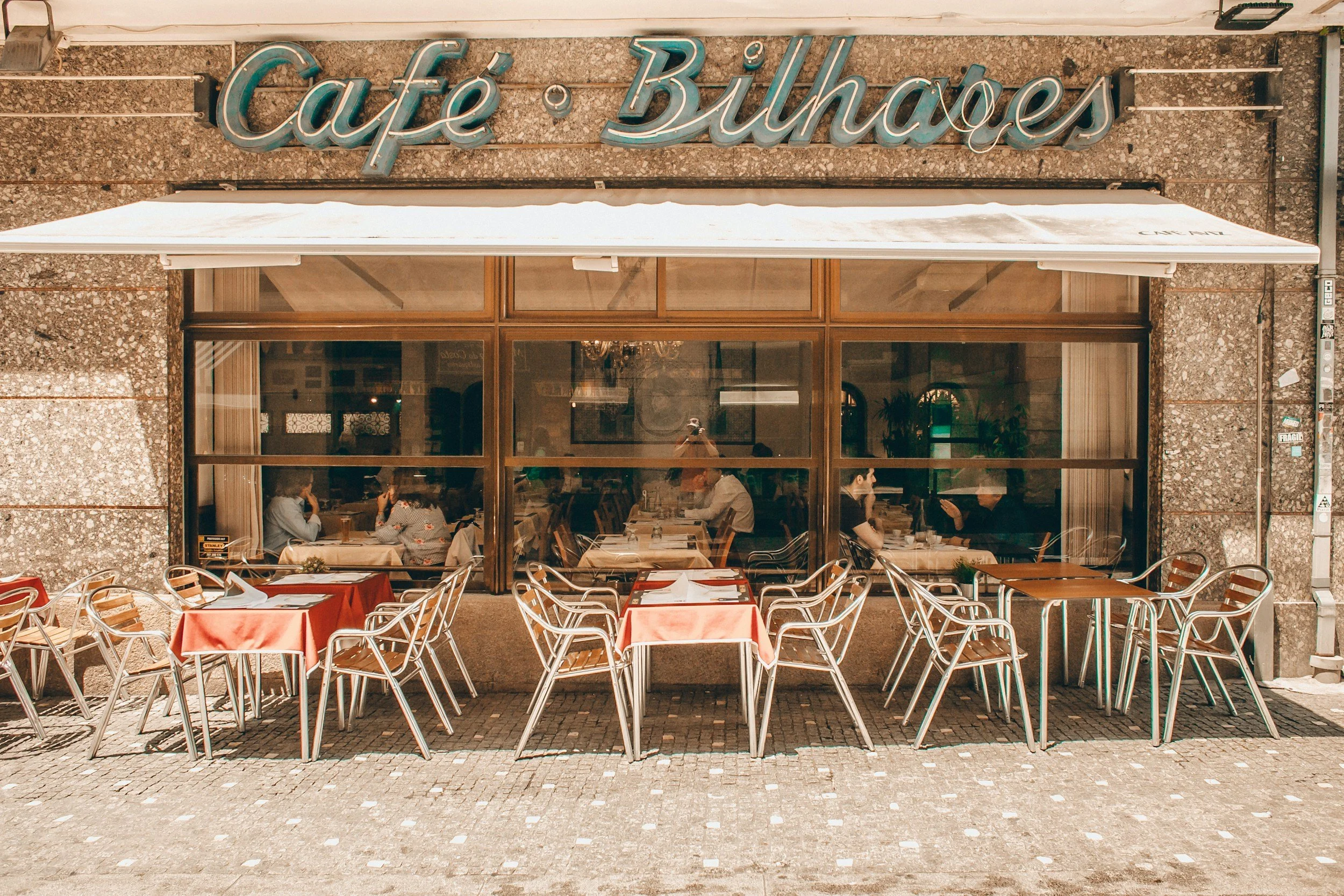
These serve your website header and social profiles. Prioritize them early in the session when energy is high and the room is freshest.
Detail shots
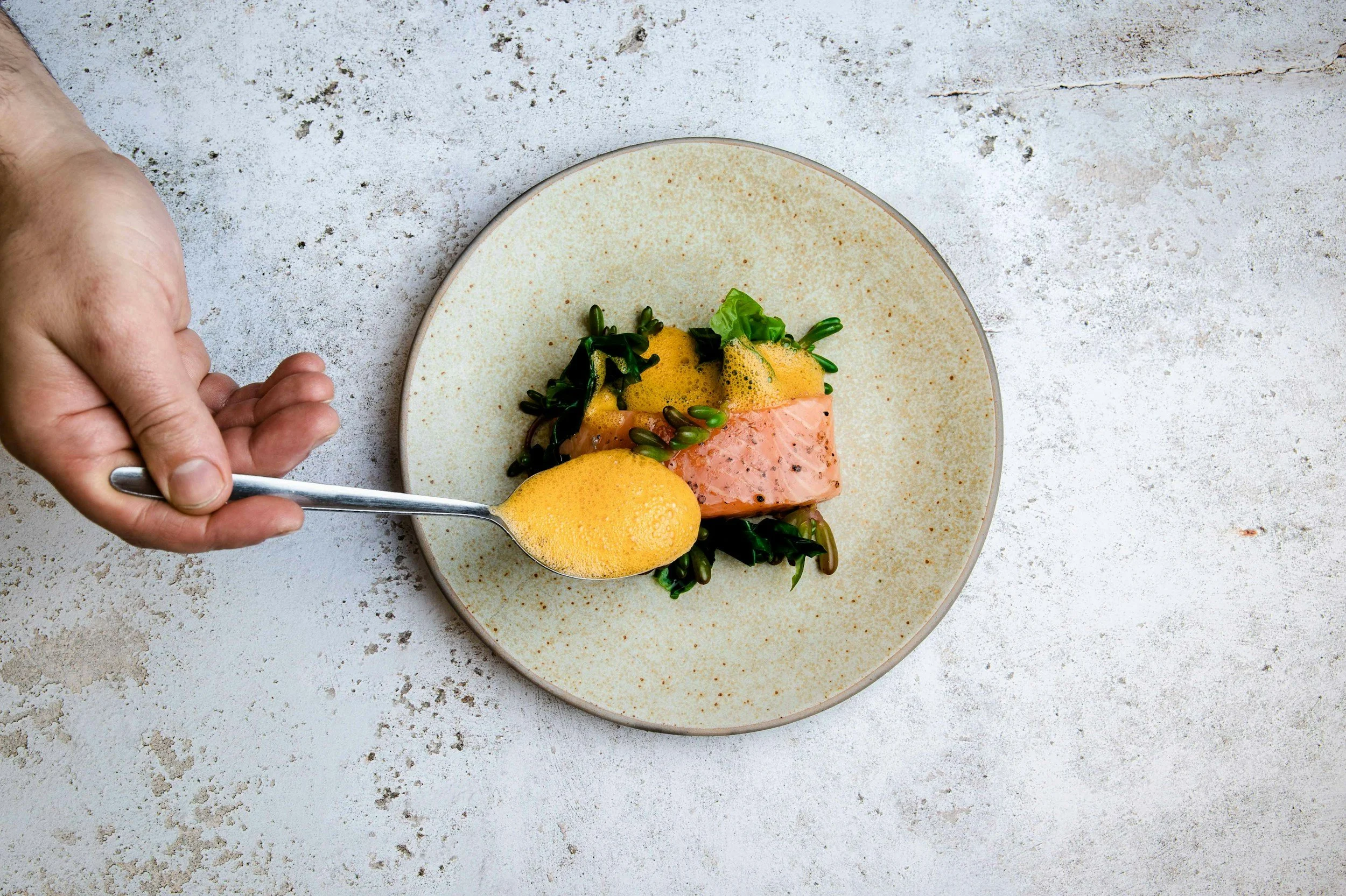
Close images of texture, steam, garnishes, and ingredients work well for menus and email campaigns. Schedule these for mid-session once the kitchen is in rhythm.
Atmosphere shots
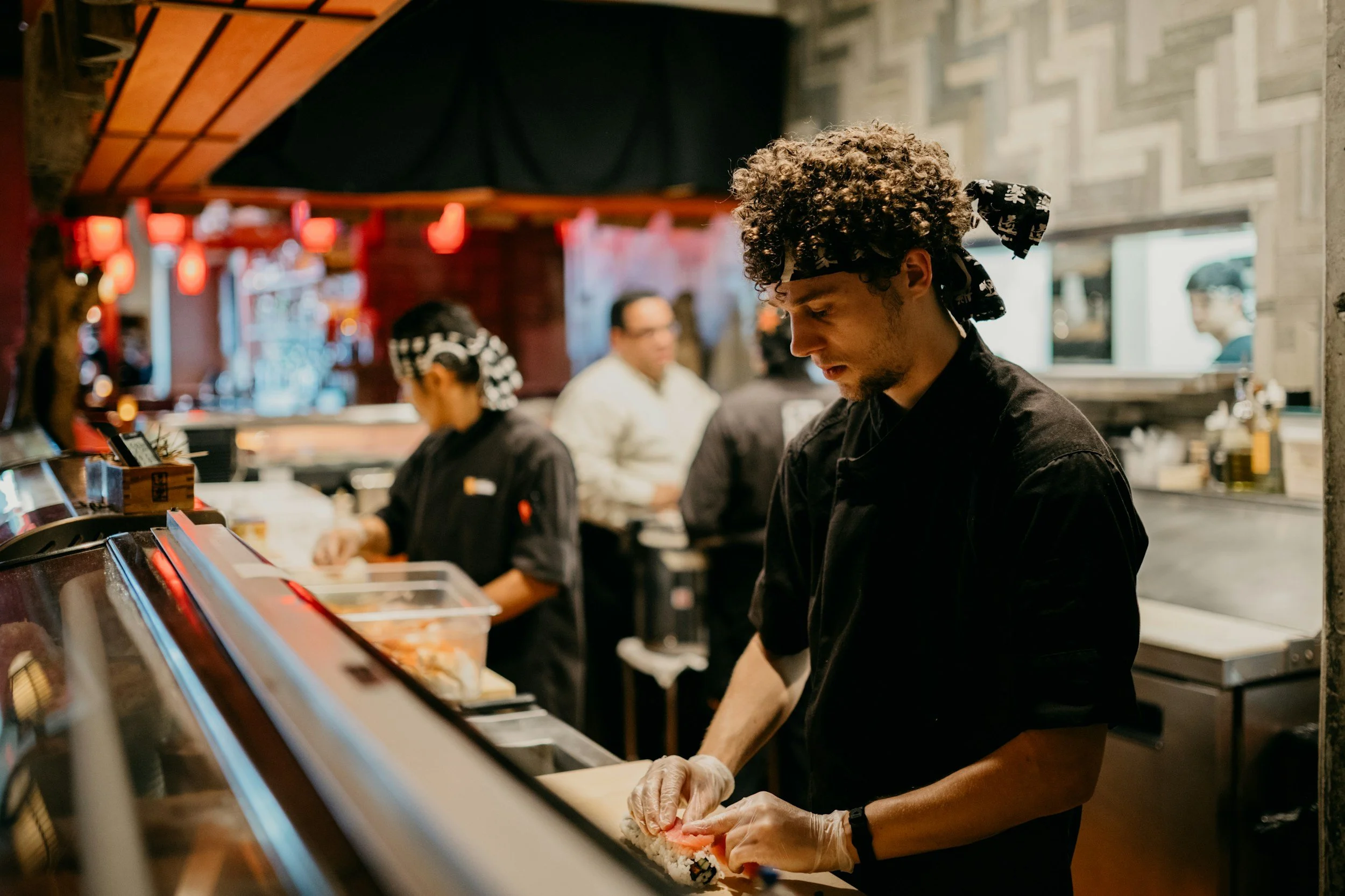
Photos showing the room, bar, and staff in motion are ideal for your Google Business Profile and reservation platforms. Capture these last, when service feels natural rather than staged.
A single well-directed shoot can supply all three categories if the shot list is built before anyone shows up with a camera. The investment in upfront planning is what makes one session go the distance.
Restaurant branding and your online presence: turning visitors into reservations
Your website is where brand equity converts into revenue. Every decision made in the strategy, logo, menu design, and photography stages only pays off if those assets are deployed correctly online, on a site built to convert visitors into seated guests. This is where restaurant branding most often falls short, not because the assets are weak but because the site structure doesn't support conversion.
A hospitality-first website has a clear structure: a hero image with a direct reservation call to action above the fold, a concise menu page that renders correctly on mobile, contact information that doesn't require digging, and load times that don't frustrate a guest searching for somewhere to eat at 7pm. At Paige Madden Design, every restaurant site we build is organized around this conversion flow, not around what looks impressive in a browser at full width.
Local SEO drives the traffic that fills those seats. Optimizing your site for local search means correct structured data, location-specific page titles, a properly claimed and updated Google Business Profile, and consistent name, address, and phone information across all directories. Use indexable HTML text for your menu rather than relying solely on a PDF upload. Search engines can sometimes index PDFs, but an HTML menu block is far more reliably crawled and gives your dishes and cuisine type a much better chance of appearing in local queries. If you must keep a PDF for download purposes, include a text-based version of the menu on the same page. These technical details directly influence whether your restaurant appears when someone nearby searches for your category of dining.
DIY versus hiring a hospitality brand studio: cost and timeline reality
The decision between building your brand yourself and hiring a professional studio really depends on three things: the complexity of your concept, your available time, and the revenue cost of getting it wrong at launch.
DIY branding for a small independent restaurant runs roughly $500 to $2,000 for tools, templates, and stock assets, plus the owner's time, which is often the highest hidden cost. The results work for idea validation or a very simple pop-up concept. They rarely hold up for a concept you plan to operate long-term or scale to a second location.
A boutique hospitality studio typically charges $4,500 to $15,000 for a complete restaurant brand system, with timelines ranging from four to twelve weeks depending on scope. Agency-level work for a flagship or multi-location concept runs $40,000 to $250,000 and can extend to six months or more. These ranges reflect current industry benchmarks for branding engagements at each tier. The difference isn't just deliverables. It's the strategy layer, the rollout coordination, and the brand consistency that holds across every asset your team touches. Paige Madden Design works in the boutique studio range, offering full hospitality brand systems and conversion-ready Squarespace websites without the overhead of a large agency. If you're ready to talk scope and budget, reach out to book a discovery call.
Measuring whether your restaurant branding is actually working
Restaurant branding is not a one-time project. It's an ongoing system, and like any system, it needs measurement. The right KPIs connect brand activity to business outcomes, not just to likes and follower counts.
Prioritize these four metrics, and track them in this order:
Incremental foot traffic or seated covers. Compare pre- and post-rebrand periods in your reservation system and POS. This is your most direct measure of whether the brand change moved the needle.
Repeat visit rate. Track this via loyalty programs or CRM over 30- and 60-day windows. Returning guests are the clearest signal that your brand has created memory and preference.
Average check size. POS transaction analysis over time shows whether your repositioned brand is attracting the guest you designed it for.
Attributed conversions from your website. Reservation clicks, phone taps, and direction requests from Google all show whether your online presence is working as intended.
Social engagement is useful only when it ties back to one of those behaviors. A thousand likes that don't move covers or check average prove nothing about brand success.
Before declaring your brand live, run through this checklist:
Brand guidelines document is finalized and accessible to your team
All digital profiles reflect the updated visual identity
The website reservation flow is tested on mobile
Google Business Profile is updated with current photos and hours
At least one photography session is complete and assets are organized for reuse
Build a brand that works as hard as your kitchen does
Restaurant branding is not a logo project. It's a system that starts with strategy, runs through every physical touchpoint in your space, and lands on a website built to convert curious visitors into confirmed reservations. When the system works, guests don't just remember a meal. They remember your restaurant by name, return on their own, and tell people about it.
The path forward is clear: define your brand foundation, build your core asset library, direct your photography intentionally, get your brand online on a well-structured site, and measure results with the right KPIs. The part that trips most independent operators is execution, designing and coordinating all of it while running a restaurant at the same time.
That's exactly what Paige Madden Design is built for. We specialize exclusively in hospitality branding and Squarespace web design, which means every decision we make is informed by how restaurants actually operate and how guests actually book. If you're ready to build a brand that supports your business as seriously as your kitchen supports the dining room, reach out to book a discovery call.
