
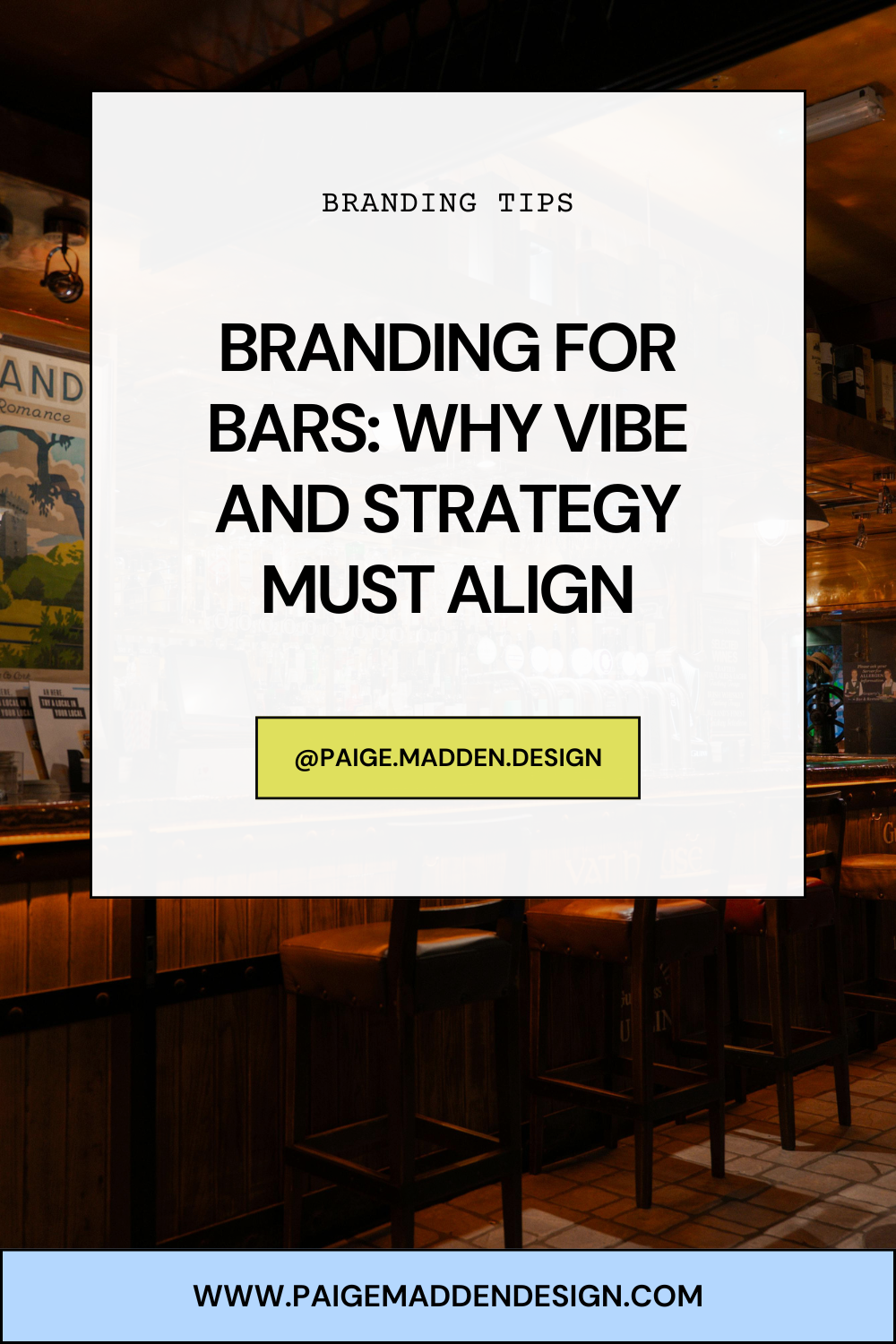
The moment a guest steps into your bar, they’re not just ordering a drink—they’re buying into a feeling. The lighting, the music, the way your staff greets them, even the menu layout all quietly communicate what your bar is about. When that vibe matches a clear brand strategy, guests feel like they’re exactly where they’re supposed to be.
But when your visuals, tone, and operations send mixed signals, the experience falls flat—even if your cocktails are outstanding. This is where intentional bar branding does the heavy lifting. Thoughtful alignment between your brand strategy and the atmosphere you create leads to better word-of-mouth, stronger loyalty, and a bar that’s instantly recognizable in a crowded market.
This post walks through how to make sure your bar’s vibe and strategy support each other at every touchpoint, plus when it’s time to bring in a designer for deeper, more cohesive work.
Bar Branding 101 – Aligning Vibe and Strategy
1. Start With a Clear Brand Concept, Not Just Aesthetic
Before choosing glassware or playlist genres, define what your bar stands for. A brand concept is more than “cocktail bar” or “sports bar”—it’s the specific promise and personality that make you different. Many bar branding guides suggest clarifying your audience, mission, and value before designing visuals or marketing campaigns.
Ask:
Who is your ideal guest, and what kind of night are they craving?
Are you the neighborhood hangout, the moody date spot, the loud party bar, or the wine-forward listening room?
What’s the one sentence you want people to say about you when they recommend your bar?
From there, build a straightforward positioning statement: “For [target guest], [bar name] is the only [type of spot] that [core benefit], because [proof].” This type of framework is commonly used in strong brand positioning to keep all decisions aligned with a single big idea.
Suggested reading: Brand Strategy Basics: How to Align Your Hospitality Concept Across Every Touchpoint

2. Define the Four V’s: Vision, Values, Voice, and Visuals
Some bar branding frameworks talk about “vision, value, voice, and visual” as core pillars of a distinct identity. These work especially well for bars, where every detail affects how the space feels.
Vision: The long-term direction for your bar. Are you building a neighborhood institution, a destination cocktail lounge, or a music-driven venue?
Values: What you stand for—local ingredients, inclusivity, sustainability, nightlife culture, etc. These guide decisions from suppliers to staff policies.
Voice: How you sound in writing and conversation. Are you cheeky, refined, irreverent, or poetic? This tone should match what guests feel when they’re at the bar.
Visuals: Logos, color palette, typography, and imagery style that all reflect your concept. For example, a speakeasy-inspired bar may lean into deep jewel tones, serif type, and vintage textures, while a bright day-drinking patio bar might use light woods, pastels, and playful san-serif fonts.
When these four V’s line up, every touchpoint feels like it belongs to the same world, both online and offline.
3. Make the Physical Space the Embodiment of the Brand
A bar’s space should be a physical translation of its brand strategy. Guides on bar branding emphasize that atmosphere, layout, and decor must evoke the emotions you want guests to feel—cozy, energized, indulgent, or adventurous.
Consider:
Lighting: Low and warm for intimate cocktail vibes; brighter, dynamic lighting for high-energy concepts.
Layout: Does the bar invite lingering (banquettes, lounge seating) or quick rounds (high-tops, stand-up rail)? Layout strongly influences how guests move and interact.
Materials and decor: Leather, dark woods, and brass can signal a classic whiskey bar; tiled surfaces and neon might fit a playful, late-night concept. Even coasters and glassware can reinforce or undermine your identity.
If your visual identity leans upscale but your furniture and decor feel temporary or mismatched, guests will sense that disconnect. The goal is for someone to see a photo of your interior and instantly associate it with your logo, social feed, and overall vibe.
4. Ensure Menus, Signage, and Merch Reflect the Same Story
Essential bar branding assets often include menus, signage, coasters, and glassware, all of which should align with a consistent identity. These “small” elements are often what guests photograph and share, making them powerful touchpoints.
Practical alignment tips:
Use the same typefaces and core colors on your menu that appear in your logo and website.
Match the tone of your drink descriptions to your brand voice—snappy and clever for a playful spot, or minimal and elegant for a serious cocktail bar.
Extend the look into physical pieces: custom coasters, matchbooks, or bar towels that feel like miniature versions of your brand concept.
Many bar branding resources stress that mismatched or low-quality printed materials weaken perceived quality, even if the actual drinks are excellent. Investing in coherent design here goes a long way toward building recognition and loyalty.
5. Align Marketing, Social Media, and Promotions With the In-Person Experience
Your bar’s brand shouldn’t change personalities when guests leave the room. Marketing strategies for bars often recommend making sure social media, promotions, and collaborations reflect the same identity guests encounter in person.
If your bar is positioned as a refined date-night spot, your Instagram should focus more on intimate shots, cocktails in low light, and narrative captions—not meme-heavy content that feels off-tone.
If you’re the local game-day bar, your feeds, events, and promos should highlight team partnerships, themed nights, and high-energy visuals that celebrate that culture.
Partnerships with local businesses, musicians, or sports teams should reinforce your positioning and values instead of confusing your audience about who you are.
Consistency across these channels builds trust and helps guests form clear expectations, which is central to effective hospitality branding.
6. Avoid the Most Common Bar Branding Mistakes
Several bar-branding resources call out recurring pitfalls that erode brand impact. These are especially important if your bar is evolving or adding concepts.
Major missteps include:
Generic themes: Leaning too heavily on clichés (e.g., “speakeasy” without a distinct twist) makes it hard to stand out.
Brand inconsistency: Using drastically different colors, logos, or tones between your website, storefront, and interior confuses guests and weakens recognition.
Poor execution: Flimsy menus, outdated decor, or awkward signage give an impression of neglect, even if your service is friendly and drinks are great.
Ignoring guest perception: Not listening to feedback when guests clearly experience your bar differently than you intend can widen the gap between strategy and reality.
The fix is rarely a full rebrand at first; it’s usually tightening what you already have, improving quality, and choosing a clearer direction.
7. When Multi-Concept or “Hybrid” Bars Need Extra Strategy
Some bars combine concepts—like a speakeasy-style interior paired with a rooftop tiki lounge, or a wine-forward bar that transforms into a late-night cocktail spot. This can work beautifully if the umbrella brand concept is clearly defined and each area feels like a chapter of the same story, not a completely different book.
Strategy tips for multi-concept spaces:
Create one overarching brand identity with sub-identities that share the same logo family, visual language, and tone.
Use signage, menus, and digital channels to explain the dual experience rather than hiding it.
Make sure guests still know what you’re about overall (e.g., curated experiences, live entertainment, craft-first drinks), not just that you have multiple “zones.”
This is often where external brand support makes the biggest difference, as the complexity can overwhelm in-house teams.
Three ways to hire a hospitality brand & Squarespace designer:
Whether you're opening a new concept, refreshing an existing restaurant group, or tackling a single design project that keeps getting pushed aside, there's a package built for where you are right now. Every engagement starts with a 30-minute discovery call — no pressure, no hard sell.
Custom Branding — from $1,250 · 4–6 weeks
Custom Squarespace Website — from $3,250 · 4–6 weeks
Frequently Asked Questions
What does it really mean for “vibe and strategy” to align?
It means the atmosphere guests feel—your lighting, music, decor, and service style—matches the brand promise and positioning you’ve defined. Bar branding resources consistently emphasize that the physical experience should be the embodiment of your brand identity.
Is strong bar branding only for upscale cocktail lounges?
No. Neighborhood dive bars, sports bars, wine bars, and hybrid spaces all benefit from clear branding. Guides to bar and restaurant branding highlight that even casual concepts see better loyalty and word-of-mouth when their identity is consistent.
What’s the first area to fix if I’m overwhelmed?
Most experts suggest starting with core assets: logo, color palette, and menus, and then ensuring signage and digital profiles match those choices. This creates a quick, visible lift in cohesion.
Can I handle bar branding in-house, or do I need a professional?
Many bars start in-house, but professional support becomes crucial as your concept grows, becomes multi-concept, or prepares for press and partnerships. A branding partner helps refine your vision and maintain consistency over time.
How long does a bar branding project usually take?
Timelines vary, but strategy and visual identity for a single bar concept typically take several weeks to a few months, depending on scope and how many touchpoints (menus, website, interiors, etc.) are included.
Successful bar branding is the marriage of strategy and vibe: who you are, who you serve, and what you promise—brought to life through every detail guests see, hear, and touch.
When those elements align, guests don’t just like your bar, they get it and want to come back with friends.
By clarifying your concept, aligning your space and materials, and tightening your marketing around a single coherent identity, you turn your bar into a memorable brand rather than just another stop on a night out.
If your bar feels good in person but your branding isn’t doing it justice, it may be time for strategic, hospitality-specific support.
Ready to align your bar’s vibe with a powerful brand strategy?
Together, your concept can evolve into a brand that guests recognize, remember, and recommend.
POSTS YOU MIGHT LIKE:
Brand Strategy Basics: How to Align Your Hospitality Concept Across Every Touchpoint
How to DIY Hospitality Branding the Right Way (and When to Call a Designer)
How to Launch a High-Converting Hospitality Website on Any Budget
